

Get to Know Us

What We Do
The mission of MIC works to close the gap between refugee rights and refugee self-reliance. We produce evidence on the structural barriers displaced people face, support reform of the policies that create those barriers, and strengthen the leadership of refugee-led civil society. Our work is evidence-led, refugee-shaped, and reform-bound.
What We Do
MIC's work is organized around three connected services. Each stands alone, and together they form the full chain from question to evidence to reform.
Research. We design and lead field studies, comparative analyses, and programme evaluations that surface the structural barriers to refugee self-reliance. Our research covers refugee documentation, employment, education access, and economic inclusion, and is co-designed with the partners with lived experience of the systems under study.
Policy and Advocacy. We translate evidence into reform proposals for governments, multilateral bodies, and donor institutions. This includes legislative analyses, policy briefs, submissions to multilateral processes, and monitoring frameworks that hold reform commitments to account.
Community Engagement. We share capacity with the refugee-led organisations that anchor our work. This includes capacity programmes, fellowships, and co-authored publications structured around shared authorship, not one-way delivery.
Our Approach
No policy about displaced people should be made without them. Every project is co-designed with the populations it concerns. Every output is built to inform decisions of governments, donors, and implementing partners. Every engagement is methodologically sound, transparent, and structured to advance refugee economic inclusion across the contexts in which we work.
Areas of Work
Migration Impact Collective produces evidence on the structural barriers to refugee self-reliance, supports the policy reforms that remove them, and strengthens the refugee-led organisations that lead this work in their own contexts. Our work is co-designed with the populations it concerns, and every output is built to inform decisions of governments, donors, and implementing partners. And in all of our work, we focus on breaking down the barriers faced by women and girls.
Barriers We Address
Migration Impact Collective works across eight thematic areas that together address the structural barriers preventing displaced people from realising their rights and building self-reliance. These areas reflect the issues we research, the policy reforms we advocate for, and the partnerships we build with refugee-led organisations and the institutions that shape migration governance. Each area is grounded in international refugee law and connected to the broader agenda of evidence-led, refugee-shaped, and reform-bound work.

Documentation and Legal Identity
Without legal documentation, refugees cannot work, study, move freely, or access the systems that protect them. Documentation is the foundation on which every other right depends. The right to work is recognized in international refugee law, but only sixty-two percent of refugees live in countries where that right is legally protected, and practical barriers, including documentation requirements, sector restrictions, and discriminatory hiring practices, often prevent its exercise where the right exists on paper. One in three refugees, approximately fourteen million people, cannot move freely, confined to camps or designated settlements through law, decree, or daily practice.
Our work in this area examines the registration and documentation barriers that determine whether refugees can exercise the rights they are formally entitled to, anchored in our field research at Kakuma Refugee Camp in Kenya.
Economic Inclusion & Self-Reliance
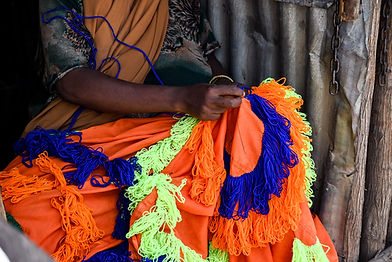
Economic inclusion means displaced people can earn, save, build assets, and participate in the economies of the countries that host them. Self-reliance is the test of whether refugee rights are real. Our work in this area examines the structural conditions that determine whether displaced populations can build sustainable livelihoods, and translates that evidence into reform proposals aligned with the Global Compact for Refugees and the Comprehensive Refugee Response Framework.

Refugee-Led Civil Society
Refugee-led organisations are closest to the people that policy is meant to serve, yet remain underfunded, under-recognized, and structurally excluded from the institutions that shape their work. Strengthening refugee-led leadership is a precondition for legitimate migration governance. Our work in this area includes capacity strengthening, institutional development, fellowships for refugee researchers, and co-authored publications structured around shared authorship rather than one-way delivery.
We partner with refugee-led organisations on research design, policy submissions, and the development of organizational systems that support long-term independence and sectoral influence.

Migration Governance and Policy Reform
Migration governance determines whether displaced people are protected or exposed. Policy frameworks, legislation, and multilateral commitments shape the conditions under which refugees live, work, and rebuild. Our work in this area includes comparative policy analysis across national contexts, legislative review and reform recommendations, submissions to multilateral processes, and monitoring frameworks that hold reform commitments to account, anchored in the Global Compact for Refugees and the Comprehensive Refugee Response Framework.

Education Access
Fewer than half of refugee children have attended school, and tertiary education remains out of reach for most. Education is a lifelong asset that determines whether displacement becomes a temporary disruption or a permanent loss of opportunity. Our work in this area focuses on refugee learning across primary, secondary, and tertiary levels, supported by our broader policy work on refugee tertiary education.

Gender Equity in Forced Migration
Displacement does not affect everyone equally. Women, girls, and gender-diverse people face compounded risks of violence, exploitation, and exclusion, and are systematically underrepresented in the institutions that shape migration policy. Our work in this area integrates gender analysis across our research and policy outputs, and supports the leadership of women and gender-diverse refugees in the institutions that govern displacement.

Climate-Induced Displacement
Climate change is driving displacement at scale, yet international refugee law was not designed for people fleeing environmental collapse. Closing the protection gap for climate-displaced people is one of the defining policy challenges of the coming decade. Our work in this area examines the legal and policy gaps that leave climate-displaced people without protection, and contributes to the development of frameworks that recognize environmental displacement as a legitimate basis for international response.
Youth Engagement and Leadership
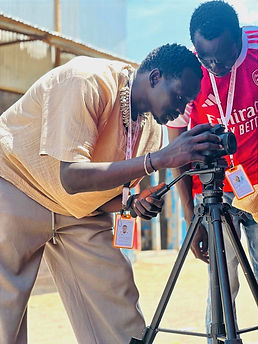
Young people make up a disproportionate share of the world's displaced population, yet remain underrepresented in the policy spaces that shape their futures. Youth engagement is both a generational equity issue and a strategic investment in the next generation of refugee leaders. Our work in this area supports young refugee advocates through mentorship, training, and inclusion in research and policy processes, building the leadership pipeline that the migration governance system will depend on.

Our Strategy
Migration Impact Collective Strategy 2026 to 2030 works to close the gap between refugee rights and refugee self-reliance. Our 2026 to 2030 strategy is built on five commitments: centring refugee-led partnership in everything we do, producing field evidence on the structural barriers displaced people face, strengthening refugee-led civil society, documenting the regression in asylum governance across powerful host states, and advancing reform on emerging displacement frontiers. Click here to learn our full strategy.
Strategy 2026 to 2030
A global agenda for refugee rights, self-reliance, and migration governance reform
The Landscape
122 M
forcibly displaced
worldwide
1 in 3
refugees cannot move freely
62%
have the technical legal right to work, but many do not in practice
96%
of funding cuts came from top 5 donors
The case for evidence-led, refugee-shaped, and reform-bound work has become more urgent.
Where we are going from 2026 to 2030
Strategic Vision
Migration Impact Collective is a global organisation working to close the gap between refugee rights and refugee self-reliance. Over the next four years, we will expand our research portfolio across regions, deepen our policy and advocacy reach with the institutions that shape migration governance, scale our partnerships with refugee-led civil society, and build the institutional foundation that allows us to serve broader audiences and populations at global scale.
Objective 1 Evidence
Field Research Portfolio
Multi-year studies on the structural barriers to refugee self-reliance
Objective 7 Foundation
Institutional Development
Funding, team, governance,and publications infrastructure
Objective 6 Frontiers
Emerging Issues
Climate displacement, gender equity, and youth leadership
Objective 2 Policy
Migration Governance
Comparative analysis and reformadvocacy across jurisdictions
Objective 3 Capacity
Refugee-led Civil Society
Strengthening for long-term independence and influence
.png)
Objective 5 Partnerships
Strategic Partnerships
Refugee-led, NGOs, Academic Institutions, Governments, Civil Society
Objective 4 Advisory Services
Consulting
Advisory services on relevant projects where revenue reinvested into the core mission.
Cross-cutting Commitments
Refugee-participation at every stage of the work
Shared authorship
Partnership
Gender analysis across research & policy
displacement does not affect everyone equally
Gender
Anchored in international refugee law
1951 Convention, 1967 Protocol, GCR & the SDGs
Legal Grounding
What Success Looks Like in 2030
A global field research portfolio: Distributed across East Africa, South Asia, the Middle East, Europe, and North America.
A sustained policy and advocacy voice: On the regression in asylum governance and the reform pathways that can rebuild protection.
A documented record of capacity strengthening: With refugee-led organisations across multiple national and regional contexts.
A consulting practice serving the migration governance sector: With revenue reinvested into the core mission.
A credible analytical presence on emerging displacement frontiers: Including climate displacement, gender equity, and youth leadership.
An institutional foundation for global scale: Including climate displacement, gender equity, and youth leadership.